 Save
Save My kitchen counter was dusted with flour like fresh snow, and I was convinced I'd bitten off more than I could chew. Making ravioli from scratch felt ambitious for a Tuesday night, but the moment I pressed that first little pillow of pasta together, I understood why people do this. The dough was silky under my fingers, the filling smelled like Sunday dinner at someone's nonna's house, and suddenly an hour didn't seem like much to give. When I finally sat down to eat, twirling my fork through that first bite of tender pasta and creamy ricotta, I felt ridiculously proud. It's not just dinner, it's a small act of devotion.
I made these for my sister's birthday one year, and she teared up a little when I brought them to the table. She said it reminded her of the little Italian place we used to go to as kids, the one with the red checkered tablecloths and the waiter who always gave us extra breadsticks. I hadn't thought about that place in years, but suddenly we were both laughing about how we used to fight over the last ravioli. Food has a way of pulling memories right out of the air like that.
Ingredients
- All purpose flour: The foundation of your dough, it gives structure and that perfect tender bite when you use just enough and don't overwork it.
- Eggs: They bind the dough and add richness, turning simple flour into something silky and golden that you'll want to touch.
- Ricotta cheese: The creamy heart of the filling, look for whole milk ricotta if you can because it makes everything taste richer and more luxurious.
- Fresh spinach: It wilts down to almost nothing, so don't be shy with the amount, and make sure you squeeze out every bit of water or your filling will be soupy.
- Parmesan cheese: Adds that salty, nutty punch that makes the filling sing, and don't skip the extra for serving because it belongs on top too.
- Nutmeg: Just a whisper of it transforms the filling from good to unforgettable, like a secret ingredient no one can quite place.
- Marinara sauce: Whether you make it or buy it, a good marinara is sweet, tangy, and bright, the perfect partner for delicate pasta.
- Garlic: Sautéed until fragrant, it wakes up the sauce and fills your kitchen with that smell that makes everyone wander in asking when dinner will be ready.
Tired of Takeout? 🥡
Get 10 meals you can make faster than delivery arrives. Seriously.
One email. No spam. Unsubscribe anytime.
Instructions
- Make the Pasta Dough:
- Mound your flour on a clean counter and create a well in the center like a little volcano, then crack in the eggs and salt. Use a fork to whisk the eggs, slowly pulling in flour from the sides until it becomes too thick to stir, then dive in with your hands and knead for 8 to 10 minutes until the dough is smooth, elastic, and no longer sticky.
- Prepare the Filling:
- Steam or sauté the spinach until it wilts down, then drain it well and squeeze out every drop of moisture you can, because wet spinach will ruin your ravioli. Mix it with ricotta, Parmesan, egg yolk, nutmeg, salt, and pepper until everything is combined and tastes like the best version of creamy, herby comfort.
- Roll the Pasta:
- Divide your rested dough in half and roll each piece into thin sheets, about 1/16 inch thick, using a pasta machine or a rolling pin and a lot of patience. The thinner you roll it, the more delicate and tender your ravioli will be, so don't be afraid to go for it.
- Shape the Ravioli:
- Place small spoonfuls of filling about 2 inches apart on one sheet of pasta, brush the edges with water, then drape the second sheet over the top and press gently around each mound to seal. Cut them into squares with a knife or ravioli cutter, then press the edges with a fork to make sure they're tightly sealed so nothing leaks out during cooking.
- Cook the Ravioli:
- Bring a large pot of salted water to a gentle boil and cook the ravioli in batches for 3 to 4 minutes, until they float to the top and look puffy. Lift them out carefully with a slotted spoon because they're delicate and you don't want to tear them after all that work.
- Make the Marinara Sauce:
- Heat olive oil in a saucepan over medium heat, add minced garlic, and sauté for about a minute until it smells amazing but hasn't turned brown. Stir in the marinara sauce, season with salt and pepper, and let it simmer for 5 minutes to bring all the flavors together.
- Serve:
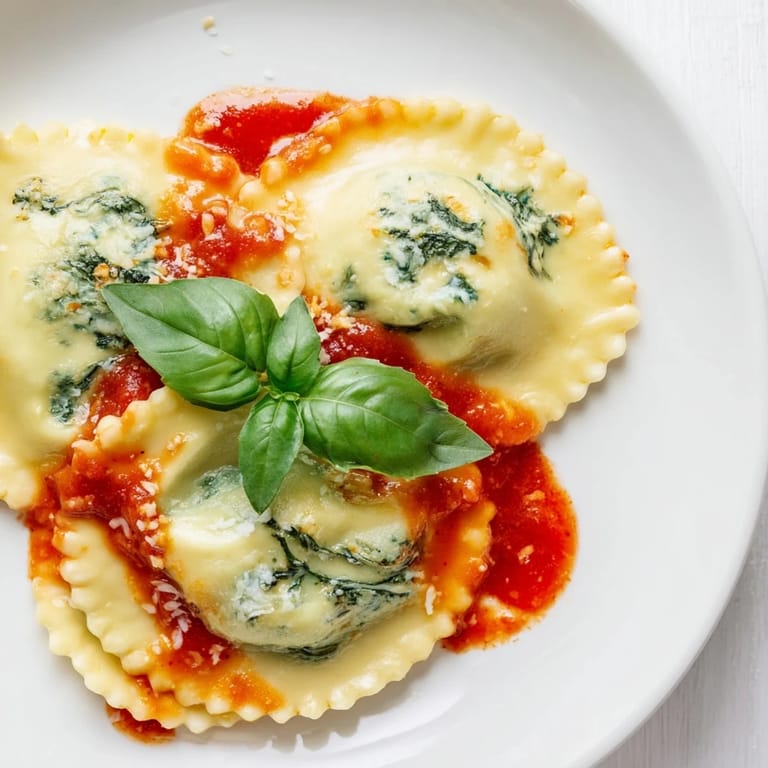
- Spoon a generous pool of sauce onto each plate, lay the hot ravioli on top, then add more sauce, a scattering of fresh basil, and a snowfall of extra Parmesan. Serve immediately while everything is hot and the pasta is still tender and perfect.
 Save
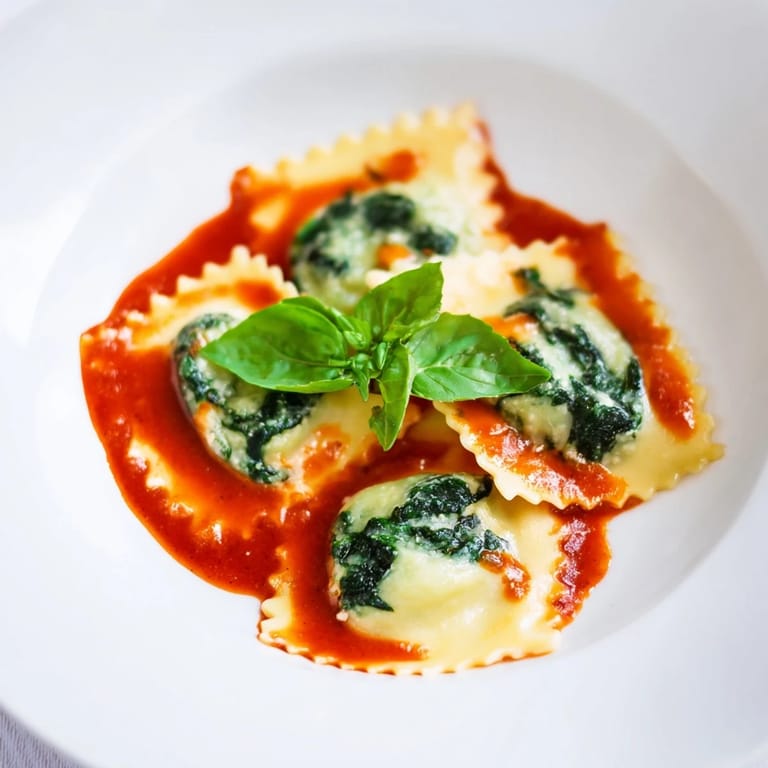
Save One night I served these to friends who'd never had homemade pasta before, and they got quiet in that way people do when food is really, really good. Someone finally said it tasted like love, and we all laughed, but I knew exactly what they meant. There's something about taking the time to make something this tender and careful that changes the whole meal. It's not just ravioli anymore, it's a moment you made with your own hands.
Making It Your Own
I've added lemon zest to the filling before and it brought this bright, unexpected note that made everyone ask what was different. You could swap the spinach for kale or chard if that's what you have, or stir in some sautéed mushrooms for an earthy twist. Some nights I've used brown butter and sage instead of marinara, and it's a completely different dish, nutty and rich and perfect for fall. The beauty of homemade ravioli is that once you know the basics, you can fill them with almost anything and they'll still feel special.
Storing and Freezing
If you make more than you need, and you should because you're already covered in flour anyway, lay the uncooked ravioli on a parchment lined baking sheet and freeze them until solid. Then toss them into a freezer bag and they'll keep for up to three months, ready to cook straight from frozen whenever you need a homemade meal without the work. Cooked ravioli don't reheat as well, so I always freeze them raw and cook them fresh when I'm ready to eat. It's like having a secret stash of comfort in your freezer.
Serving Suggestions
I love serving these with a crisp green salad dressed simply with lemon and olive oil, something to cut through the richness of the pasta. A glass of chilled Pinot Grigio or Vermentino is perfect alongside, light and bright enough to let the delicate flavors shine. If you want to make it feel even more special, add a drizzle of good olive oil and a few torn basil leaves right before serving.
- Pair with garlic bread or focaccia to soak up every bit of that marinara sauce.
- Serve with roasted vegetables like zucchini or cherry tomatoes for a complete meal.
- Top with toasted pine nuts or a handful of arugula for extra texture and freshness.
 Save
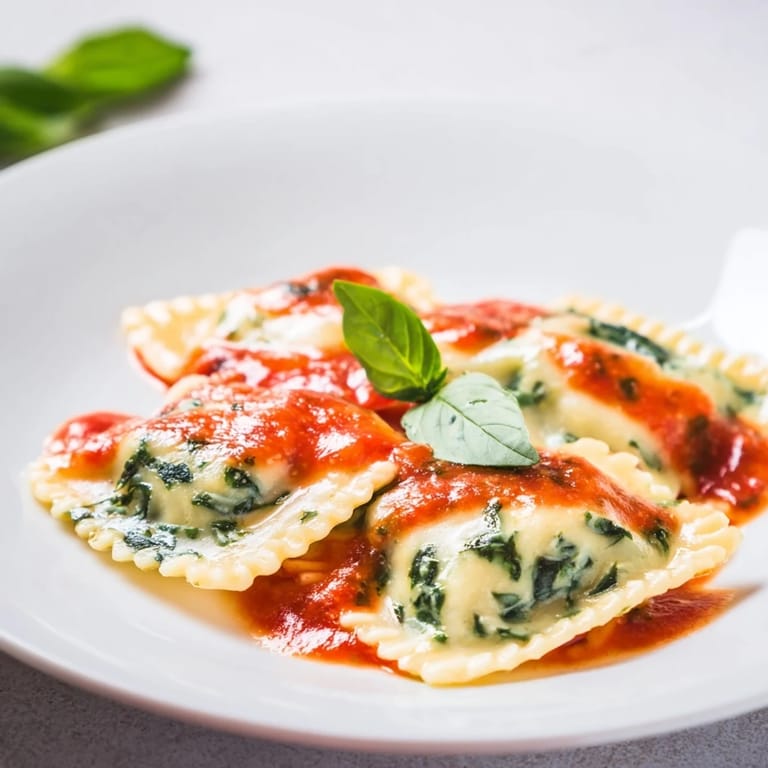
Save Every time I make these, I remember why I fell in love with cooking in the first place. It's messy and time consuming and totally worth it when you sit down to eat something this good. I hope you make them soon, and I hope they make you feel as proud as they make me every single time.
Recipe FAQs
- → Can I prepare ravioli ahead of time?
Yes, you can assemble ravioli up to 24 hours in advance. Place them on a parchment-lined baking sheet, freeze until solid, then transfer to freezer bags. Cook directly from frozen, adding an extra 2-3 minutes to the boiling time.
- → What's the best way to seal ravioli properly?
Brush the pasta edges with water before sealing to activate the gluten. Press firmly around the filling, eliminating air pockets, then use a fork to crimp the edges. This prevents filling from escaping during cooking.
- → How do I know when ravioli is perfectly cooked?
Ravioli is ready when it floats to the surface of the water. Cook for an additional 1-2 minutes after floating to ensure the pasta is tender throughout. Avoid overcrowding the pot, which can lower water temperature and affect cooking.
- → Can I use dried spinach instead of fresh?
Frozen spinach works wonderfully and is often more convenient. Thaw completely and squeeze out all excess moisture before mixing with ricotta. Avoid dried spinach, which tends to be grainy and won't blend smoothly into the filling.
- → What wines pair well with this dish?
Crisp white wines like Pinot Grigio, Vermentino, or Sauvignon Blanc complement the creamy filling and tomato sauce beautifully. The acidity cuts through richness while the minerality enhances the spinach and herb flavors.
- → How can I enhance the filling's flavor?
Add lemon zest for brightness, minced fresh herbs like basil or parsley, or a touch of garlic powder. A generous pinch of nutmeg is traditional and essential. Some cooks incorporate ricotta cream or mascarpone for extra richness.