 Save
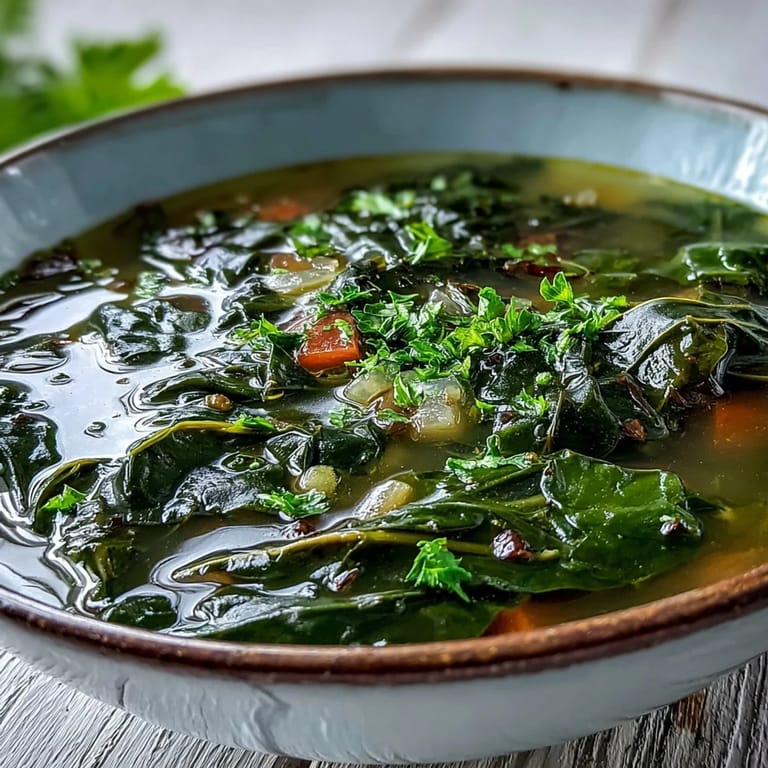
Save My neighbor appeared at my door one chilly afternoon with an armful of Swiss chard from her garden, insisting I take it before it bolted in the heat. I'd never cooked with it before, just nodded politely at farmers market stands. That evening, chopping the emerald leaves, I realized how versatile they could be—tender, earthy, nothing intimidating about them at all. This soup became my go-to way to use up whatever greens I had on hand, and now I find myself making it on autopilot whenever I need something honest and warm.
I made this for my sister during her first week in a new apartment, armed with just her bare kitchen and a borrowed pot. She'd been living on takeout, tired and overwhelmed, and watching her face relax after that first spoonful reminded me that soup is sometimes exactly what people need—comfort without pretense. We sat on her kitchen floor eating it straight from the pot, and she asked for the recipe before I left.
Ingredients
- Swiss chard, 1 large bunch (about 400 g), stems and leaves separated and chopped: The stems cook slower than leaves, so separating them matters more than you'd think—it ensures everything finishes tender at the same time instead of leaves turning to mush.
- Yellow onion, 1 medium, finely chopped: This is your flavor foundation, so don't skip it or rush the sautéing; those five minutes make a real difference in depth.
- Carrots, 2 medium, diced: They add natural sweetness and body; don't peel them if they're fresh, just scrub well.
- Celery stalks, 2, diced: This classic trio with onion and carrot creates the aromatic base that makes soup taste like it took hours.
- Garlic, 3 cloves, minced: Fresh garlic blooms when it hits hot oil, filling your kitchen with that unmistakable signal that something good is happening.
- Vegetable broth, 1.2 liters (5 cups): Use the best broth you can find or make your own; the soup is only as flavorful as your liquid.
- Olive oil, 2 tablespoons: Good quality oil matters here since it's one of the few fat components in the finished dish.
- Sea salt and freshly ground black pepper, to taste: Season in stages rather than all at once, tasting as you go—this prevents over-salting.
- Crushed red pepper flakes, 1/4 teaspoon, optional: A whisper of heat that doesn't announce itself loudly, just adds complexity if you want it.
- Lemon juice, from 1/2 lemon: This brightens everything at the end, so don't skip it even if you think the soup tastes fine without it.
- Fresh parsley, 2 tablespoons chopped: Stir most of it in at the end so you keep that fresh green color and flavor.
- Parmesan cheese, grated, for serving, optional: If you use it, a light hand is best—just enough to add richness without dominating.
Tired of Takeout? 🥡
Get 10 meals you can make faster than delivery arrives. Seriously.
One email. No spam. Unsubscribe anytime.
Instructions
- Build your aromatics:
- Heat the olive oil in a large pot over medium heat until it's shimmering and warm to the touch. Add your diced onion, carrots, and celery, then sauté for about five or six minutes, stirring occasionally, until the onion turns translucent and the vegetables start to soften at the edges.
- Wake up the garlic and chard stems:
- Stir in the minced garlic and chard stems, and let them cook for another two or three minutes—you'll smell the garlic transform from raw and sharp to mellow and fragrant. This moment matters more than you'd expect.
- Add the greens and broth:
- Dump in all those chopped chard leaves along with the vegetable broth, salt, pepper, and red pepper flakes if you're using them. Bring it all to a boil over medium-high heat, then immediately turn it down to a gentle simmer—you want occasional bubbles rising lazily, not an aggressive rolling boil.
- Let time do the work:
- Simmer uncovered for fifteen to twenty minutes, stirring now and then, until the vegetables are completely tender and the broth has taken on a subtle green tint from the chard. Taste a piece of carrot; it should yield to a spoon without resistance.
- Finish with brightness:
- Stir in the lemon juice and most of the fresh parsley, then taste and adjust salt and pepper if needed. The lemon should sing a little, cutting through the earthiness without screaming for attention.
- Serve it:
- Ladle the soup into bowls, scatter any remaining parsley on top, and add a pinch of Parmesan if that's your style. Serve while it's still steaming.
 Save
Save  Save
Save There's a quiet magic in simple vegetable soup—the way it sits in your stomach like a warm hug, the way you can eat it standing at the stove without guilt. I've learned that some of my best meals have been the ones I wasn't trying to impress anyone with, just feeding myself with intention and care.
Making It Heartier
If you want the soup to feel more substantial—to anchor you through a cold day or stretch it further—there are gentle ways to build it up without losing the clean, light quality that makes it so appealing. A can of drained white beans stirred in during the last five minutes adds protein and creaminess without cream. A diced potato added right at the beginning with the carrots gives the broth body and makes the whole thing more filling. I've even added a handful of small pasta shapes or rice, cooked separately and stirred in at the end, turning it into a complete meal.
For Vegetarians and Vegans
This soup is naturally vegetarian and gluten-free, which means it welcomes almost any dietary preference without apology. If you eat dairy, the Parmesan is a lovely finishing touch that adds a salty, umami depth. For a vegan version, simply skip the cheese or use a plant-based alternative; the soup stands tall enough on its own without it, though I understand the appeal of that finishing richness.
Cooking Ahead and Storage
This is the kind of soup that tastes even better the next day, as flavors settle and deepen while it rests in the refrigerator. Make it on a Sunday and you'll have easy lunches waiting for you all week. It freezes beautifully for up to three months, though I've noticed the chard leaves lose a bit of their vibrant color—still delicious, just less visually striking.
- Store in airtight containers in the fridge for up to four days, or frozen for three months.
- When reheating, do it gently over low heat with a splash of extra broth if it's thickened up.
- Add fresh parsley and lemon juice again just before serving to brighten flavors that may have mellowed.
 Save
Save  Save
Save This soup exists in that beautiful space where nutrition and comfort shake hands, where eating well doesn't feel like a sacrifice or a performance. Make it for yourself on a weeknight when you're tired, or make it for someone who needs feeding—either way, it's a small kindness that happens to be absolutely delicious.
Recipe FAQs
- → Can I use frozen Swiss chard instead of fresh?
Yes, you can use frozen Swiss chard. Thaw and drain it well before adding. Since frozen chard is already soft, add it during the last 10 minutes of simmering to prevent overcooking.
- → How do I store leftover Swiss chard soup?
Store in an airtight container in the refrigerator for up to 4 days. The soup can also be frozen for up to 3 months. Reheat gently on the stovetop, adding a splash of broth if needed to adjust consistency.
- → Can I substitute other greens for Swiss chard?
Absolutely. Kale, spinach, or collard greens work well as substitutes. Adjust cooking time accordingly—spinach needs only 5 minutes, while kale may need the full 15-20 minutes to become tender.
- → What can I add to make this soup more filling?
For a heartier version, add one can of white beans, chickpeas, or diced potatoes. You can also stir in cooked pasta, rice, or quinoa during the last few minutes of cooking.
- → Why add the chard stems separately from the leaves?
Swiss chard stems are thicker and take longer to cook than the delicate leaves. Adding stems first ensures they soften properly, while adding leaves later prevents them from becoming mushy and preserves their color.
- → Can I make this soup in a slow cooker?
Yes. Sauté the aromatics first for best flavor, then transfer everything to a slow cooker. Cook on low for 4-5 hours or high for 2-3 hours. Add lemon juice and parsley just before serving.