 Save
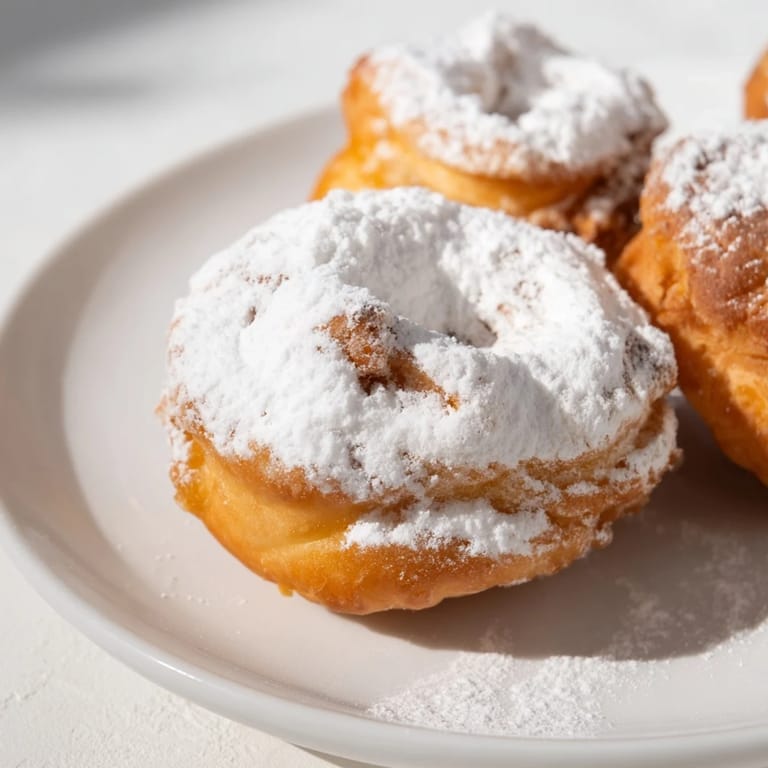
Save My aunt Maria taught me to make zeppole on a Friday afternoon when I was eight, the kitchen filling with that unmistakable aroma of hot oil and vanilla while she narrated every move like she was passing down a family secret. She'd pull golden puffs from the oil with such practiced ease, dusting each one in a cloud of powdered sugar that somehow ended up everywhere—on her apron, my nose, even in my hair. There's something magical about watching simple batter transform into something so irresistibly crispy and pillowy that you can't help but sneak one straight from the paper towels while it's still steaming. Now whenever I make them, I'm right back in that kitchen, and my house smells like a celebration.
I once made three batches on Christmas Eve because my cousin insisted they needed to bring some to his new in-laws' house, and honestly, those golden-sugar-dusted balls became the thing everyone remembered about dinner more than the main course. Watching people's faces light up when they bit into one, that warm powdered sugar dissolving on their tongue—it reminded me that sometimes the simplest things feel the most special.
Ingredients
- All-purpose flour: The foundation that gives zeppole their delicate structure; make sure it's not packed down when you measure or they'll be dense.
- Baking powder: This is your secret weapon for that signature airy, puffed texture inside—don't skip it or substitute it.
- Granulated sugar: Sweetens the dough subtly so the powdered sugar dusting is the real star of the show.
- Salt: A small pinch that somehow makes everything taste more like itself.
- Eggs: Bind everything together and help create that tender crumb.
- Whole milk: Creates a smooth batter that flows just right from the spoon into hot oil.
- Vanilla extract: Adds a warmth and familiarity that makes people ask what the secret ingredient is.
- Unsalted butter: Melted butter enriches the dough with a subtle richness without overpowering the delicate vanilla notes.
- Vegetable oil: High smoke point means it stays steady at frying temperature and won't impart any off flavors.
- Powdered sugar: The final flourish that makes them look (and taste) like something from a bakery.
Tired of Takeout? 🥡
Get 10 meals you can make faster than delivery arrives. Seriously.
One email. No spam. Unsubscribe anytime.
Instructions
- Mix your dry ingredients:
- In a large bowl, whisk together the flour, baking powder, sugar, and salt until everything is evenly distributed. This step prevents lumps from forming later.
- Create your wet base:
- Beat the eggs in another bowl, then add the milk, vanilla extract, and melted butter, whisking until you have a smooth, homogeneous mixture. You want the temperature to feel neutral, not hot.
- Bring it together:
- Gradually pour the wet ingredients into the dry ingredients, stirring gently until a thick, sticky batter forms—it should be thicker than pancake batter but not as thick as cookie dough. Don't overmix or you'll develop too much gluten.
- Heat your oil:
- Pour the vegetable oil into your deep pot and bring it to exactly 350°F (175°C), using a thermometer to be sure. This temperature is crucial; too hot and they'll brown before cooking through, too cool and they'll be greasy.
- Start frying:
- Using two spoons, scoop a heaping tablespoon of batter with one spoon and use the other to gently slide it into the oil. Work in batches of 4-6 at a time to avoid crowding, which drops the oil temperature.
- Monitor and turn:
- Fry for 3-4 minutes total, turning each zeppola halfway through with a slotted spoon so they brown evenly on all sides and puff up beautifully. They'll tell you when they're ready by turning a rich golden brown.
- Drain and finish:
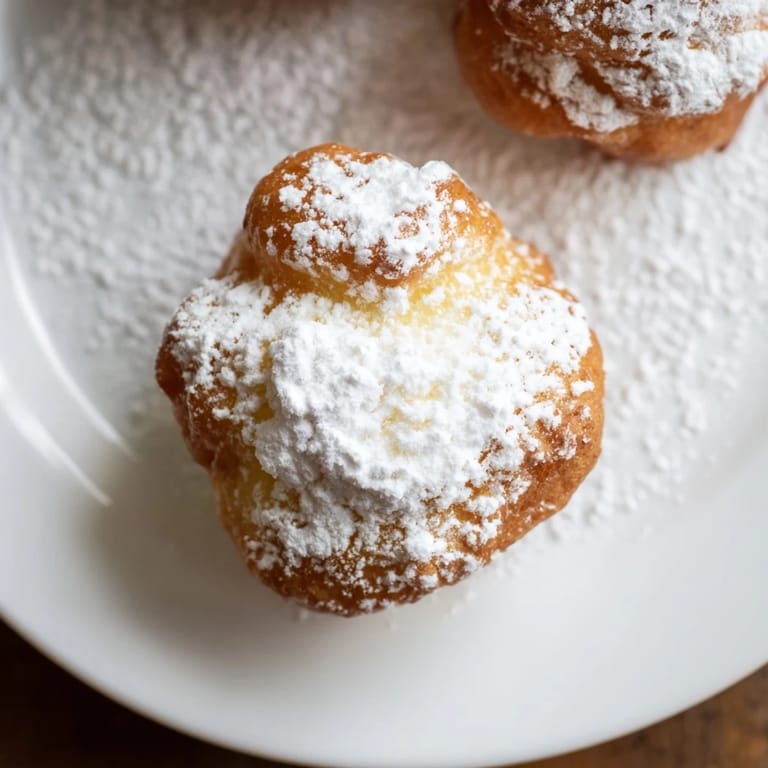
- Remove each one with a slotted spoon and place on paper towels to drain. While they're still warm—this is the key—dust them generously with powdered sugar, letting each one get a proper coating.
 Save
Save There was a moment during a neighborhood block party when a five-year-old asked if these were "fairy bread" because they looked so impossibly light and golden, and watching her bite into one with such reverence made me understand why this simple recipe has survived generations. That's when I realized zeppole aren't really about technical skill—they're about creating that small moment of pure joy on someone's plate.
Flavor Variations Worth Trying
Once you master the basic version, zeppole become a canvas for creativity without losing their essential character. I've added a pinch of lemon zest for a bright, slightly tangy lift that feels seasonal and unexpected, and the orange blossom water variation leans into that Italian pastry tradition in the most elegant way. The chocolate dipping sauce route (melted dark chocolate thinned with a touch of cream) turns them into something that feels fancy enough for guests but tastes like comfort food.
The Oil Temperature Lesson
Temperature control is where most zeppole adventures go sideways, and it took me several batches to truly appreciate why thermometers exist. At 350°F, you get that perfect balance where the outside crisps up in minutes while the inside has time to puff up and stay tender. Drop the temperature even ten degrees and you're frying in oil that's too cool, which means more oil absorption and a heavier final product.
Serving and Storage Ideas
Zeppole are absolutely best within the first hour of making them, while they still have that textural contrast between crispy exterior and soft interior. After that, they gradually become denser, though they're still completely edible and honestly taste better than most packaged desserts even the next day. I've found that storing them in an airtight container at room temperature keeps them fresher longer than you'd expect, and a quick warm-up in a low oven restores some of that initial crispness if you're eating them later.
- Serve with a side of warm chocolate sauce, raspberry coulis, or even honey for dipping to add an extra dimension of flavor.
- Make them a few hours ahead and dust with powdered sugar right before serving for a prettier presentation and fresher taste.
- If you're feeding a crowd, keep the finished zeppole warm in a low oven while you continue batching the rest of the batter.
 Save
Save Making zeppole is less about following rules and more about understanding that heat, timing, and a light touch create something that tastes like someone cares. Serve them warm, watch people's faces, and you'll understand why this recipe has traveled through generations and kitchens.
Recipe FAQs
- → What ingredients create the light texture?
A combination of baking powder, eggs, and milk creates a sticky batter that fries into light, airy dough balls.
- → How is the dough cooked to achieve a crisp outside?
The dough is deep-fried in hot vegetable oil at 350°F (175°C) until golden and puffed, resulting in a crisp exterior.
- → Can the flavor be enhanced?
Yes, adding a pinch of lemon zest to the batter adds a fresh, aromatic note to the fried dough.
- → What finishing touch is added before serving?
The fried dough balls are generously dusted with powdered sugar for a sweet and delicate finish.
- → Are there recommended accompaniments?
Serving these with chocolate or raspberry sauce enhances the taste experience with complementary flavors.