 Save
Save My mom would drag me to the county fair every summer, and I'd make a beeline for the fried dough stand before anything else. There was something about watching the vendor drop those pale discs into bubbling oil, the way they'd puff up and turn golden in seconds, that made my eight-year-old self believe magic was real. Years later, I realized I could recreate that moment at home, and the first time I nailed the temperature and timing, I understood why she always let me have two.
I made these for a late-night gathering once, and my friend Sarah walked in mid-fry. The smell hit her before she even set her bag down, and she literally stopped talking mid-sentence. She stood there watching the oil sizzle, and when I dusted the first batch with cinnamon sugar, she said it was the most honest thing I'd ever made for her. That's when I knew this recipe was special.
Ingredients
- All-purpose flour: The foundation, and it needs to be fresh because old flour absorbs moisture differently and throws off your dough ratio.
- Baking powder: This is what creates those magical air pockets that make them puff up in the oil, so don't skip it or substitute with baking soda.
- Salt: Even in a dessert, a pinch balances the sweetness and makes the other flavors sing.
- Granulated sugar and softened butter: These get mixed into the dough to give it just enough richness and tender texture without making it greasy.
- Whole milk: Brings everything together into a soft, slightly sticky dough that's forgiving to work with.
- Vegetable oil: Use a neutral oil with a high smoke point; peanut oil works beautifully if you have it.
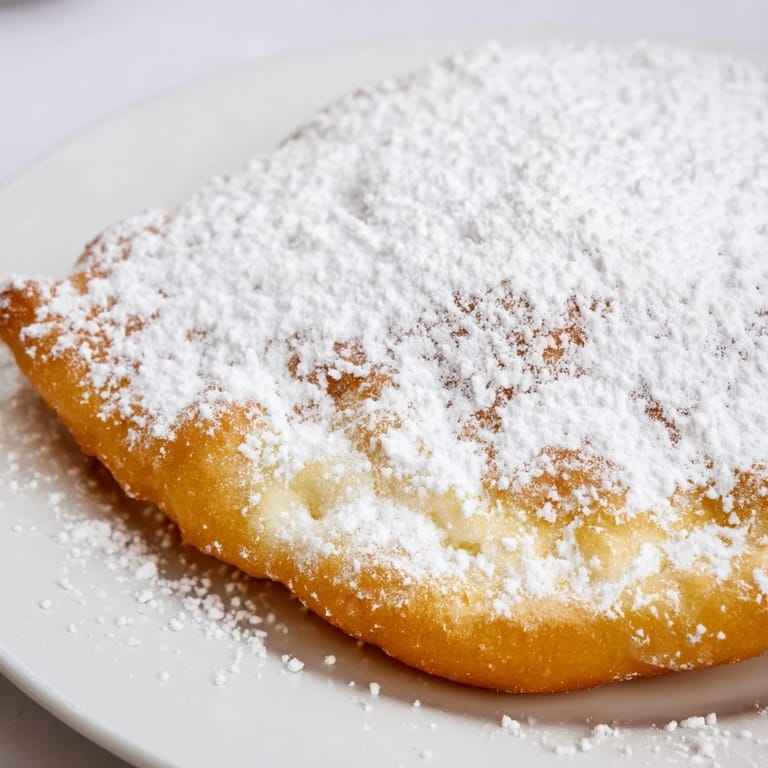
- Powdered or granulated sugar: Powdered adheres better when warm, but granulated gives a satisfying crunch if that's your preference.
- Honey: Drizzle it while they're hot and it soaks into the warm dough like edible luxury.
Tired of Takeout? 🥡
Get 10 meals you can make faster than delivery arrives. Seriously.
One email. No spam. Unsubscribe anytime.
Instructions
- Mix the dry ingredients:
- Whisk flour, baking powder, salt, and sugar together in a large bowl. Do this slowly so the baking powder distributes evenly and you don't get lumps.
- Cut in the butter:
- Add softened butter and use a fork or your fingertips to work it into the flour until it looks like coarse breadcrumbs. This step is quick, usually just a minute or two of gentle pressing.
- Bring it together:
- Gradually pour in milk while stirring gently with a fork until the dough just comes together. It should be soft and slightly tacky, not dry and stiff.
- Knead gently:
- Turn the dough onto a lightly floured surface and knead for only about a minute. Overworking develops gluten and makes the final dough tough instead of tender.
- Shape the discs:
- Divide dough into 8 equal pieces and pat or roll each into a disc about 1/4 inch thick. They don't need to be perfect circles; rustic is charming.
- Heat the oil:
- Pour oil into a deep skillet or heavy pot and bring it to exactly 350°F. Use a thermometer here; eyeballing is how people end up with greasy dough.
- Fry until golden:
- Slip discs into the hot oil one at a time, frying 1 to 2 minutes per side until puffed and golden brown. Don't crowd the pan or the temperature will drop and they'll absorb oil instead of crisping up.
- Drain and finish:
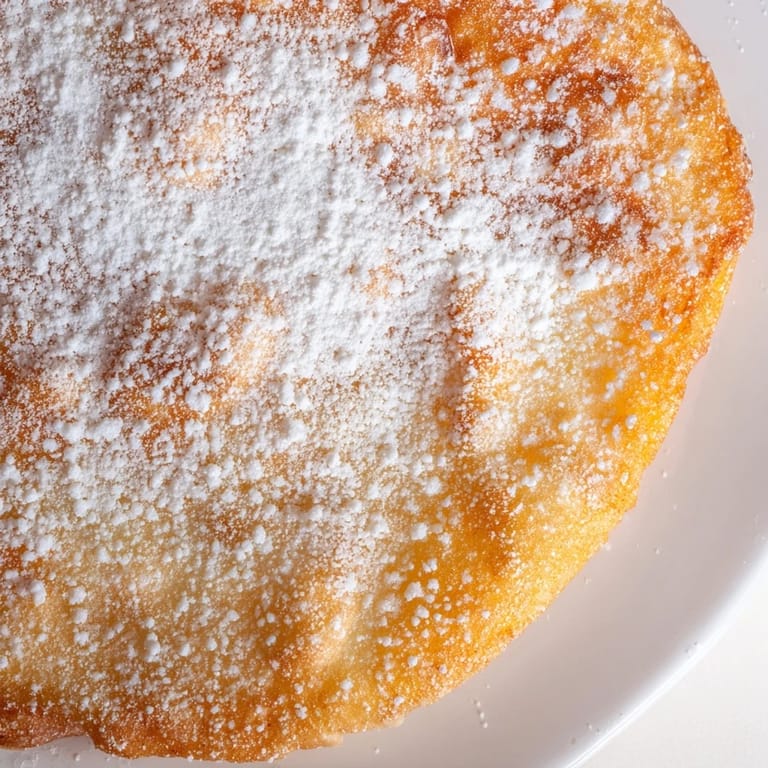
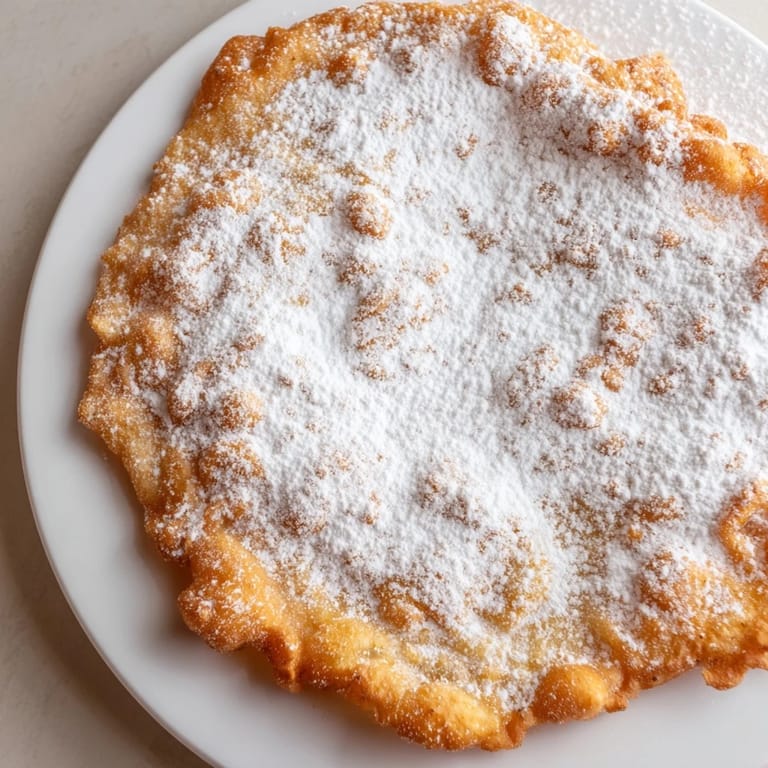
- Lift them out with a slotted spoon and let them rest on paper towels. While still hot, dust generously with powdered sugar or drizzle with warm honey, and serve immediately.
 Save
Save I brought a batch to a friend's housewarming once, still warm in a paper bag, and watched three grown adults argue about who got the last one. That's when I realized these aren't just fried dough; they're a love language in fried form.
Temperature and Oil Matter Most
The difference between mediocre fried dough and exceptional fried dough comes down to oil temperature and knowing when to pull them out. I learned this the hard way after my first batch came out looking like greasy hockey pucks. A kitchen thermometer becomes your best friend here. Once you hit 350°F and maintain it, the magic happens almost instantly: the dough puffs, the outside crisps, and you're left with something light enough to eat multiple pieces without guilt.
Flavor Variations That Actually Work
The basic sugar coating is perfect, but after making these dozens of times, I've discovered a few variations that elevate them. A pinch of cinnamon mixed into the powdered sugar gives them a subtle warmth that makes people ask what the secret ingredient is. Honey drizzled while they're still hot soaks into the warm dough and creates this luxurious texture contrast. I've even dusted some with crushed pistachios and a touch of rose water, and suddenly they felt like dessert at a fancy restaurant instead of a fairground snack.
Storage and Make-Ahead Tips
These are honestly best eaten within an hour of frying, when they're still warm and crispy. That said, you can make the dough ahead and refrigerate it for up to 8 hours, which is perfect if you want fried dough for breakfast. Just let it come to room temperature for 10 minutes before frying. Leftovers can be reheated gently in a low oven, though they'll never quite be the same as fresh.
- Make the dough the night before if you want warm fried dough without the morning rush.
- If you have leftovers, store them in an airtight container and reheat gently to restore some of that crispness.
- Double this recipe without worry; they disappear quickly and the extra dough keeps in the fridge up to two days.
 Save
Save There's something deeply satisfying about frying dough from scratch and watching someone's face light up when they bite into something so simple yet so perfect. Every time I make these, I think of that fair and my mom letting me have seconds.
Recipe FAQs
- → What oil is best for frying the dough?
Use a neutral oil with a high smoke point, such as vegetable or canola oil, to ensure even cooking and a crispy texture.
- → How can I tell when the dough is cooked properly?
Fry each piece until it turns golden brown and puffs up slightly, usually about 1–2 minutes per side.
- → Can I add flavors to the dough or toppings?
Yes, a pinch of cinnamon in the sugar topping adds warmth, and drizzling honey or serving with fruit preserves enhances sweetness.
- → How do I avoid greasy fried dough?
Make sure the oil is at the correct temperature (350°F/175°C) before frying to prevent excess oil absorption.
- → What tools are needed for preparation and frying?
A mixing bowl, whisk, rolling pin, deep skillet or pot, slotted spoon or tongs, and paper towels for draining are essential.