 Save
Save There's something almost meditative about making butter cookies on a quiet afternoon. I was procrastinating on laundry one Sunday when I decided to bake instead, and somehow the simple act of creaming butter and sugar became the entire day's anchor. My kitchen filled with that warm, vanilla-touched smell that makes everything feel intentional, even when you're just standing at the counter in old sweats. These cookies emerged golden and crisp, the kind that shatter gently between your teeth—nothing fancy, just butter, sugar, and the kind of precision that actually matters.
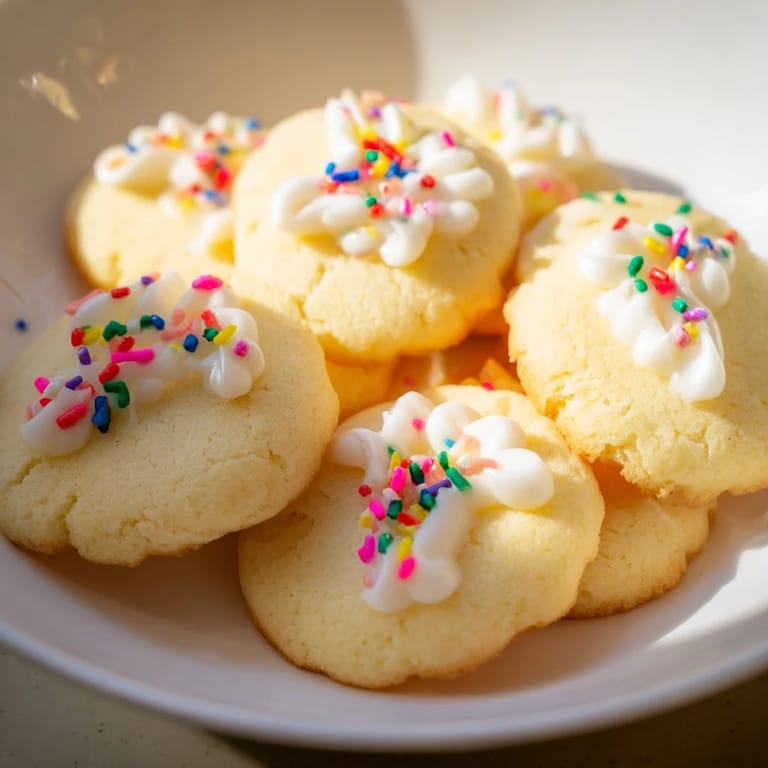
I made these for a friend's daughter's birthday, and the kid arranged them into little edible mosaics with the icing and sprinkles. Watching her decide where each sprinkle belonged, taking it more seriously than any artist I know, reminded me that the best recipes aren't about impressing—they're about giving people permission to be creative. That afternoon, the cookies were just the beginning.
Ingredients
- Unsalted butter: Use the real thing, softened to that stage where your finger leaves a gentle dent—this is where the magic starts.
- Granulated sugar: The standard white sugar works perfectly; don't substitute with brown or muscovado here.
- Egg: Room temperature makes a difference in how smoothly everything combines, so pull it out ahead of time.
- Pure vanilla extract: The real extract, not the imitation, brings that subtle warmth that lingers in the back of your mouth.
- All-purpose flour: Measure by spooning and leveling, not by scooping straight from the bag—this avoids packing too much flour in.
- Baking powder: Just enough to give the cookies their delicate lift without making them cake-like.
- Fine sea salt: This tiny amount cuts through the richness and makes every other flavor brighter.
Tired of Takeout? 🥡
Get 10 meals you can make faster than delivery arrives. Seriously.
One email. No spam. Unsubscribe anytime.
Instructions
- Cream the butter and sugar:
- Beat them together until the mixture looks pale and clouds form in the bowl—this usually takes 2 to 3 minutes with an electric mixer. You're incorporating tiny air bubbles that will help the cookies rise and stay tender.
- Add the wet ingredients:
- Drop in the egg and vanilla, then mix until everything disappears into the butter mixture and there are no streaks of egg white visible. This step is quieter than the first, almost smooth.
- Combine dry and wet:
- Whisk the flour, baking powder, and salt in a separate bowl, then fold them gently into the wet mixture. Stop as soon as no white streaks remain—overworking develops gluten, which makes these cookies tough instead of tender.
- Chill and rest:
- Divide the dough in half, press each into a disk, wrap tightly in plastic wrap, and refrigerate for at least 1 hour. This pause lets the gluten relax and the flavors settle into themselves.
- Roll and cut:
- Preheat your oven to 350°F while the dough comes out, then work with one disk at a time on a lightly floured surface, rolling to 1/4-inch thickness. The dough should be cool enough to hold its shape but soft enough to cut cleanly.
- Bake until golden:
- Space the cookies 1 inch apart on parchment-lined baking sheets, then bake for 10 to 12 minutes until the edges just turn golden. They'll still feel soft in the center—that's intentional.
- Cool and decorate:
- Let them sit on the baking sheet for 5 minutes to firm up, then transfer to a wire rack to cool completely before decorating with icing or sprinkles.
 Save
Save These cookies became my go-to when I needed to bring something to a gathering but wanted an excuse to have my hands busy while everyone else was talking. There's something about standing in the kitchen with a piping bag full of royal icing that lets you exist quietly, part of the party but with a good reason to stay on the periphery. That small choice—to bake instead of scramble—changed how I show up for people.
The Science of Tender Cookies
Shortbread cookies work because of the ratio of fat to flour—there's so much butter that the gluten strands can't fully develop, even if you wanted them to. The egg acts as a gentle binder while the baking powder gives just enough lift to keep things from being too dense. Temperature matters because cold dough holds its shape, while the warmth of the oven lets the butter melt gradually, creating that perfect tender crumb. I learned this by accident when a friend left their dough out on the counter and the cookies baked flat and crispy, which was actually delicious but entirely different from what we were going for.
Decorating Like You Mean It
Royal icing can feel intimidating, but it's just egg whites and powdered sugar beaten until stiff peaks form—no magic required. The icing dries hard, which means the cookies travel well and look polished without needing to be refrigerated. I've seen people get frustrated trying to get the icing to flow just right, but honestly, rustic is more forgiving and often more charming. Some of my favorite versions have been where the icing pooled slightly or the sprinkles got a little chaotic, and nobody complained.
Variations Worth Trying
The base recipe is flexible enough to whisper different directions depending on your mood. A quarter cup of cocoa powder swapped for the same amount of flour gives you chocolate butter cookies that taste like they came from a fancy bakery. Lemon zest added to the dough brings brightness, while a pinch of cardamom or a tiny bit of almond extract adds unexpected depth. The dough also freezes beautifully, so you can roll and cut a batch during a quiet morning and bake whenever you want fresh cookies without the whole process.
- For chocolate cookies, use high-quality cocoa powder and don't skip sifting it to avoid lumps.
- If you're using zest or extracts, go light—these flavors intensify as the cookies bake and cool.
- Unfrosted cookies store in an airtight container for up to a week, though they rarely last that long.
 Save
Save These cookies remind me that some of the best moments in the kitchen come from showing up without pressure, just presence. Making them never feels like work, even when I'm making three batches back to back.
Recipe FAQs
- → What makes these cookies tender yet crisp?
The combination of softened butter creamed with sugar and the careful mixing of dry ingredients results in a tender crumb, while baking just until edges turn golden creates a crisp texture.
- → Can I prepare the dough in advance?
Yes, the dough can be wrapped and refrigerated for up to 3 days or frozen for up to a month before rolling and baking.
- → How can I add chocolate flavor?
Replace a portion of the flour with cocoa powder to infuse a chocolate taste without changing the texture significantly.
- → What tools are recommended for shaping the cookies?
Cookie cutters are ideal for shaping the dough into various forms, making decoration easier and more uniform.
- → Any tips for decorating these shortbreads?
Once fully cooled, use royal icing or glaze and sprinkle sanding sugar or other decorations to add color and sweetness.
- → Are there allergy considerations to note?
These cookies contain dairy, egg, and wheat gluten. Gluten-free flour blends can be used as a substitute if needed.