 Save
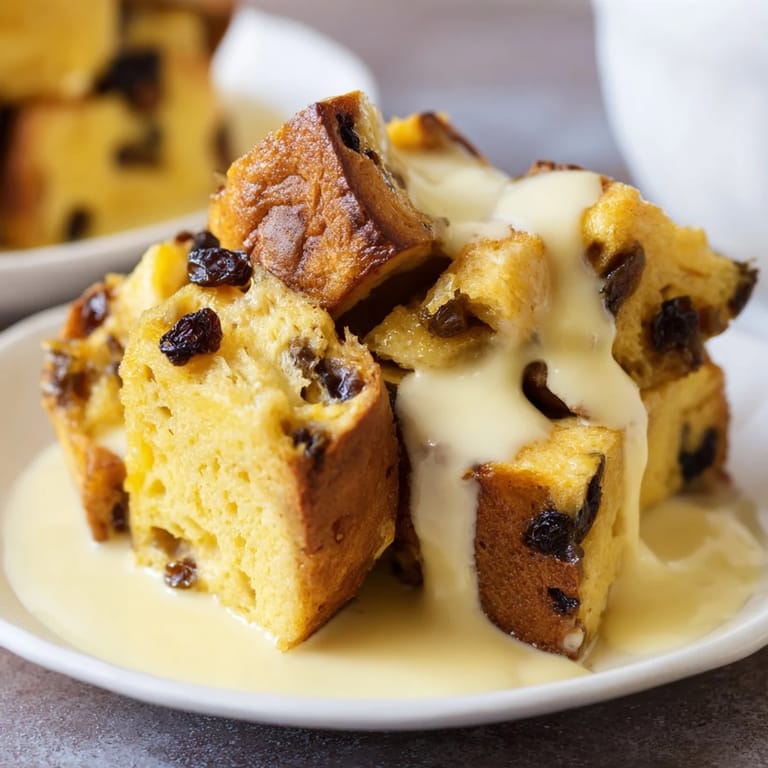
Save My neighbor Louise showed up at my door one winter evening with a stale brioche loaf and a tired smile, saying she'd overbaked and couldn't bear to throw it away. I'd never made bread pudding before, but something about the idea of rescuing forgotten bread felt right, so we soaked those cubes in custard together while the kitchen filled with cinnamon-vanilla warmth. Twenty minutes later, pulling that golden pudding from the oven felt like discovering treasure we'd accidentally baked.
I made this for my book club last month, and it arrived at the table still steaming, the aroma of vanilla and nutmeg filling the room before anyone even took a bite. Someone said it tasted like Sunday mornings at their grandmother's house, and suddenly I understood why this humble dessert has endured for generations—it's not fancy, but it means something.
Ingredients
- Stale bread (6 cups cubed): Use French bread or brioche if possible—they have enough structure to absorb the custard without turning mushy, and the slight sweetness of brioche makes each spoonful richer.
- Raisins (1 cup): Plump them up by soaking in warm water for five minutes first; they'll soften and release their sweetness throughout the pudding.
- Whole milk (2 cups) and heavy cream (1 cup): This combination creates the silky custard base that makes bread pudding different from regular bread pudding—don't skimp on the cream.
- Eggs (4 large): They bind everything together and give the pudding that custardy, almost creamy interior texture.
- Granulated sugar (3/4 cup): Adjust this down by a few tablespoons if you like less sweetness; the raisins and butter add plenty of their own.
- Vanilla extract (2 tsp): Real vanilla makes a noticeable difference here, so it's worth using the good stuff.
- Cinnamon and nutmeg: These spices are what make bread pudding feel warm and nostalgic—don't leave them out or reduce them.
- Unsalted butter (2 tbsp melted, plus extra for greasing): The melted butter whisked into the custard adds richness, while extra butter prevents sticking.
Tired of Takeout? 🥡
Get 10 meals you can make faster than delivery arrives. Seriously.
One email. No spam. Unsubscribe anytime.
Instructions
- Prepare your stage:
- Preheat your oven to 350°F and grease the baking dish well—bread pudding is forgiving, but a well-buttered dish prevents it from sticking to the edges. Cube your bread into roughly one-inch pieces so they're substantial enough to soak up custard without dissolving into mush.
- Layer and scatter:
- Spread your bread cubes in the prepared dish and scatter the raisins over them. If you're impatient like me, you'll want to plump those raisins first in warm water so they're soft and sweet.
- Build the custard:
- Whisk together milk, cream, eggs, sugar, vanilla, cinnamon, nutmeg, salt, and melted butter in a large bowl until completely smooth. The mixture should smell almost like eggnog with spice.
- Soak and wait:
- Pour the custard evenly over the bread, then gently press down so the bread absorbs as much as possible. Let it sit for ten minutes—this resting time matters more than you'd think.
- Bake to golden:
- Bake for 40 to 45 minutes until the top is puffed and golden and a knife inserted in the center comes out clean. The pudding will still jiggle slightly when you shake the dish, and that's exactly right.
- Make the sauce while baking:
- While the pudding bakes, combine cream, sugar, and butter in a small saucepan over medium heat, stirring until the sugar dissolves and the mixture just begins to simmer. Remove from heat and stir in vanilla and a pinch of salt—the sauce will thicken slightly as it cools.
- Serve warm:
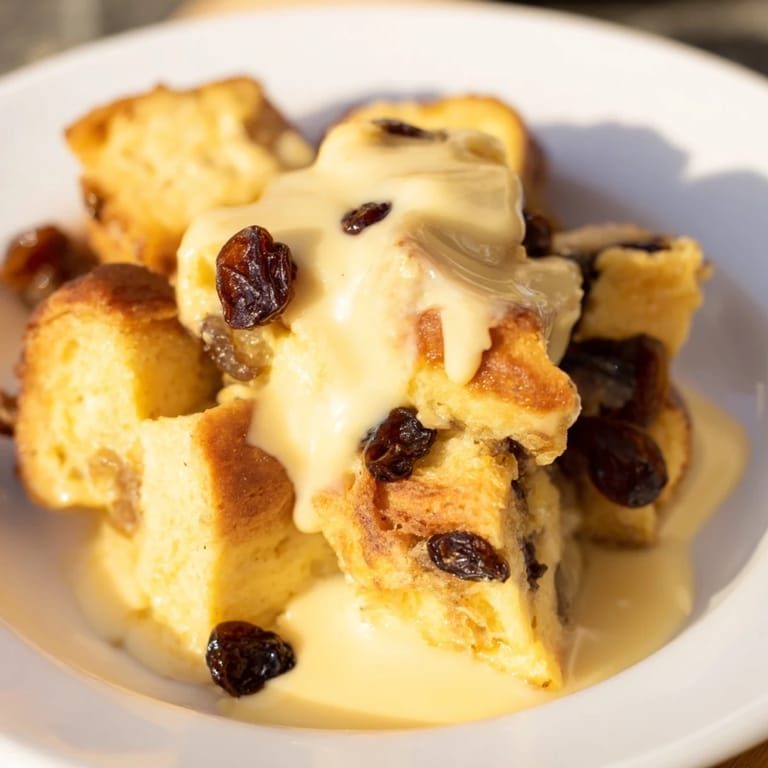
- The moment the pudding comes out of the oven, drizzle it generously with warm sauce. If you can wait five minutes before serving, the flavors meld beautifully; if you can't, I won't judge.
 Save
Save The first time I served this, my daughter asked for seconds before finishing her first bowl, and suddenly I realized this wasn't just dessert—it was proof that sometimes the simplest ingredients become something memorable when made with care.
The Magic of Rescue Baking
Bread pudding exists because someone once refused to waste stale bread, and that small act of resourcefulness became one of the most beloved desserts across two continents. There's something deeply satisfying about taking something forgotten and transforming it into something people gather around. This recipe is an invitation to look at your kitchen differently, to see potential where you might see waste.
Customizing Your Version
I've made this with dried cranberries instead of raisins and loved the tartness against the sweet custard, and another time I swapped in chocolate chips for something richer and darker. The formula stays the same, but the pudding shifts with each variation. Don't be afraid to experiment—bread pudding wants to be flexible and forgiving.
Serving and Storage
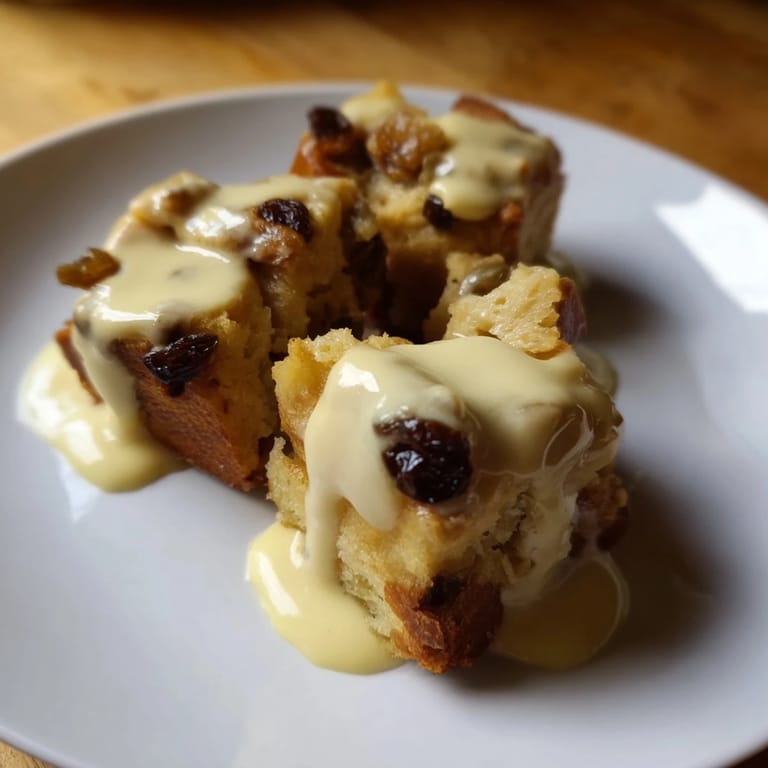
Bread pudding tastes best served warm with sauce poured over the top, but I've also reheated leftovers the next day in a gentle oven and found them just as comforting. Store covered in the refrigerator for up to three days, and you can make the sauce fresh each time or save it in a jar.
- For a boozy version, add a splash of bourbon or rum to either the custard or the sauce.
- Leftovers can be warmed in a 300°F oven for about ten minutes, just enough to take the chill off.
- If you want to make this ahead, assemble everything through the soaking step and refrigerate overnight, then bake the next day.
 Save
Save This bread pudding has become my answer to leftover bread and my comfort food when I need something warm and familiar. Make it once, and you'll find yourself saving stale bread on purpose.
Recipe FAQs
- → What type of bread works best?
Stale French bread or brioche is ideal as it absorbs custard well without falling apart.
- → Can I substitute the raisins?
Dried cranberries, chopped dates, or chocolate chips make tasty alternatives.
- → How long should the bread soak in custard?
Allow the bread to soak for about 10 minutes to fully absorb the custard mixture.
- → What flavors enhance this dish?
Vanilla, cinnamon, and nutmeg work together to add warmth and aroma.
- → How is the creamy sauce prepared?
The sauce is made by gently heating cream, sugar, and butter, then stirred with vanilla and a pinch of salt until smooth.