 Save
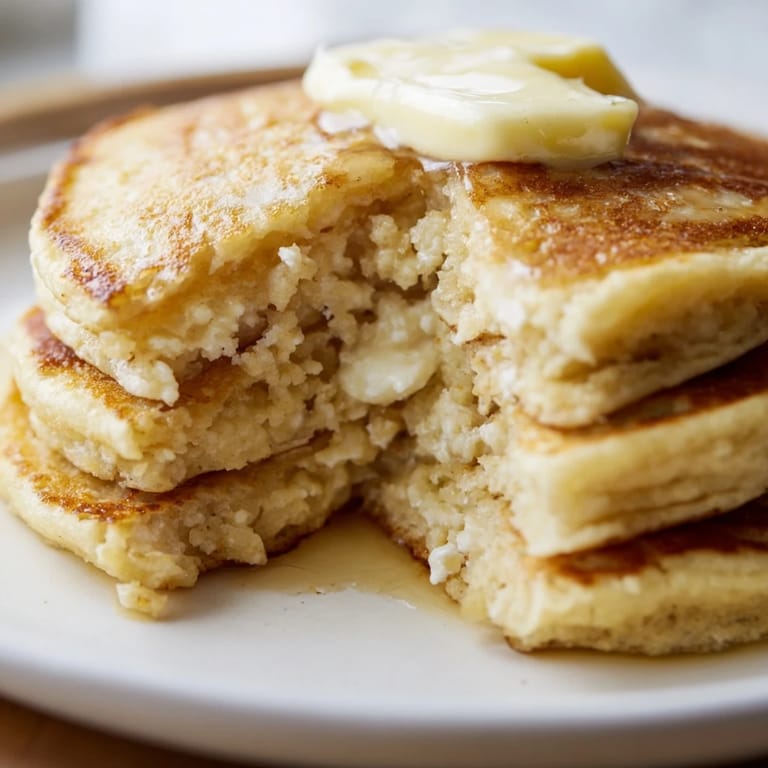
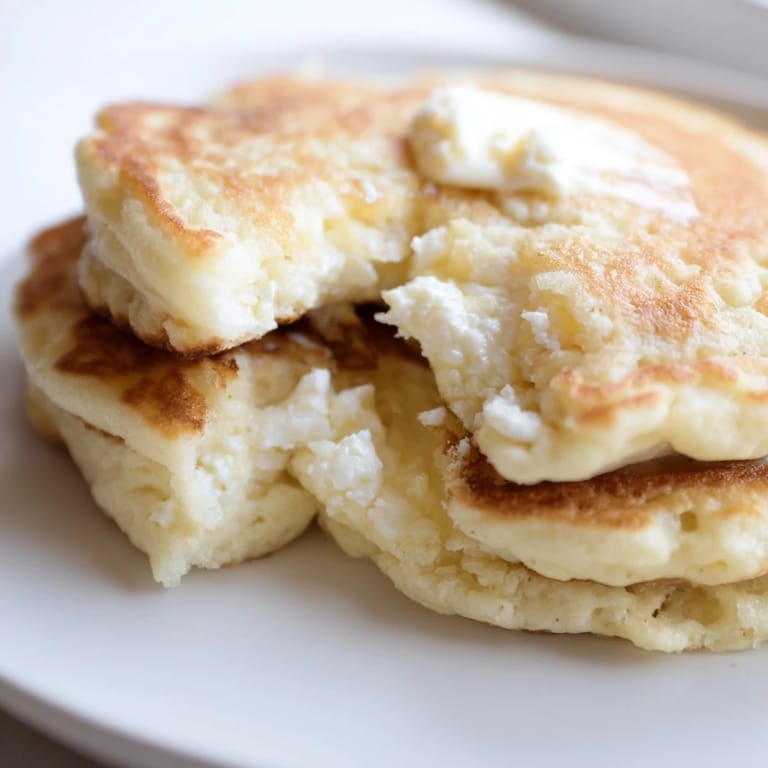
Save My daughter once asked me why her friend's pancakes were so flat, and I realized mine had always been different—almost custard-like in the center, with edges that crisped just right. That's when I learned the secret: cottage cheese. It sounds unusual, but those little curds melt into something magical, giving you pancakes that are simultaneously fluffy and tender, with a subtle tang that makes you reach for seconds without quite knowing why.
I made these for a weekend brunch once when someone mentioned they'd never had cottage cheese pancakes before, and the moment they took a bite, their whole face changed. It's that kind of recipe—humble on paper, but it always feels like a small discovery on the plate.
Ingredients
- Cottage cheese (1 cup, full-fat or low-fat): This is your secret weapon for tenderness and protein; full-fat varieties give a slightly richer taste, but both work beautifully.
- Milk (1/4 cup): Thins the batter just enough to make it spreadable; don't skip this step.
- All-purpose flour (3/4 cup): Less flour than traditional pancakes means less gluten development and more tender results.
- Sugar (1 tbsp): Adds subtle sweetness and helps with browning on the griddle.
- Baking powder (1/2 tsp): The rising agent that gives you those beautiful bubbles without heaviness.
- Salt (1/4 tsp): Enhances all the flavors you won't even realize are there.
- Eggs (3 large): Bind everything together and contribute to that custard-like texture in the middle.
- Vanilla extract (1 tsp): A warm note that rounds out the subtle tang of the cottage cheese.
- Butter or neutral oil (2 tbsp for cooking): Creates that golden crust everyone loves; use real butter if you want that aroma filling your kitchen.
Tired of Takeout? 🥡
Get 10 meals you can make faster than delivery arrives. Seriously.
One email. No spam. Unsubscribe anytime.
Instructions
- Blend your base:
- Whisk the cottage cheese, eggs, milk, and vanilla in a large bowl until mostly smooth—small curds are your friends, not your enemy. This usually takes about a minute of whisking, and you'll feel when it's right.
- Mix your dry team:
- In a separate bowl, whisk together flour, sugar, baking powder, and salt. This keeps your batter from getting tough and ensures everything is evenly distributed.
- Marry the two:
- Pour the dry ingredients into the wet mixture and stir just until combined—this is where restraint matters. Stop while small flour streaks remain visible; overmixing develops gluten and makes everything dense.
- Heat your griddle:
- Place a nonstick skillet over medium heat and let it warm for a full minute. Add a small piece of butter and listen for that gentle sizzle—that's your signal everything's ready.
- Scoop and spread:
- Ladle about 1/4 cup of batter onto the griddle and let it settle; spread gently with the back of your spatula if needed. The batter will be thicker than regular pancake batter, and that's exactly right.
- Watch for bubbles:
- After 2 to 3 minutes, you'll see bubbles forming on the surface and the edges will turn opaque. Flip once, gently, and cook for another 1 to 2 minutes until the second side is golden and set.
- Keep them coming:
- Transfer finished pancakes to a warm plate while you cook the rest, adding a touch more butter or oil to the skillet between batches to prevent sticking.
- Serve while warm:
- Plate them up and add your favorite toppings—fresh berries, honey, maple syrup, or even a dollop of Greek yogurt for extra tang.
 Save
Save There's something about the smell of butter hitting a hot griddle that signals the start of a good morning, and these pancakes always feel like a small celebration—nourishing without pretense, impressive without fuss.
Why This Works
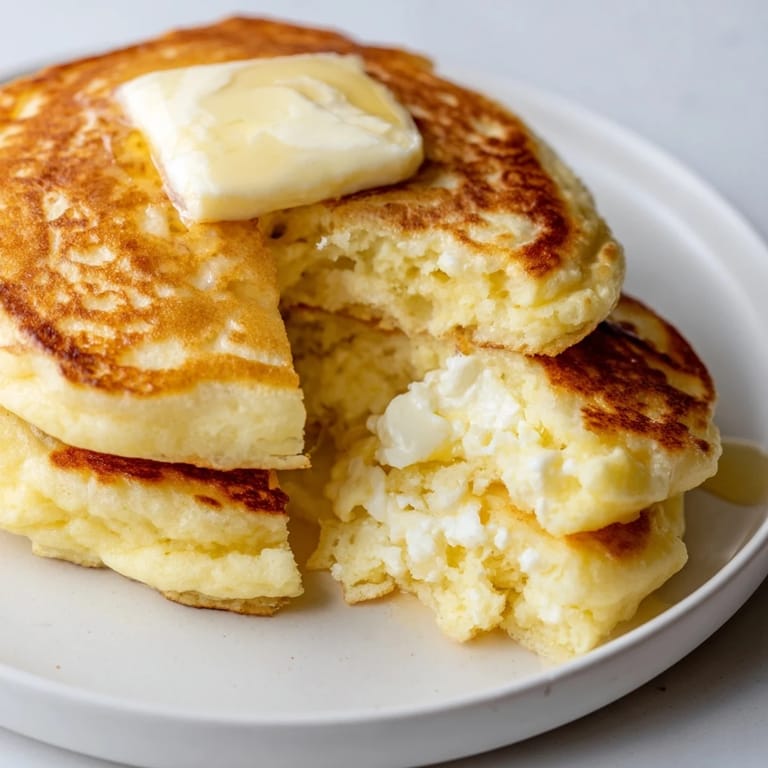
Traditional pancakes rely on air bubbles alone for fluffiness, but cottage cheese brings both structure and moisture, creating a tender crumb that stays soft even after cooling. The eggs provide richness and binding power, while the reduced flour means less gluten to make things tough. The result is a pancake that's genuinely different from the norm—more substantial, more interesting, and somehow more satisfying.
Variations and Customizations
Once you master the base, you can play: a pinch of cinnamon or cardamom warms things up beautifully, while lemon zest or fresh ginger add brightness. For a heartier version, substitute whole wheat flour for half the all-purpose flour. Chocolate chips, mashed banana, or even a handful of blueberries folded in at the end all work wonderfully. The cottage cheese base is sturdy enough to handle additions without losing its character.
Storage and Make-Ahead Magic
These pancakes freeze beautifully—stack the cooled pancakes between parchment squares and freeze in an airtight container for up to a month. Reheat them in a toaster for a quick breakfast, or warm them gently in a skillet to restore that just-cooked texture. You can also refrigerate uncooked batter in a covered container for up to two days, though you might need an extra tablespoon of milk when you cook it since the batter thickens over time.
- Freeze pancakes between parchment to prevent sticking and make portioning easy.
- Bring frozen pancakes to room temperature before toasting for more even reheating.
- Leftover batter actually improves after a few hours as the flavors meld together.
 Save
Save These pancakes taught me that the best recipes are the ones that make people pause mid-bite and ask what's different. There's quiet confidence in serving something nourishing that nobody expected to be quite so good.
Recipe FAQs
- → How does cottage cheese affect the pancake texture?
Cottage cheese adds moisture and a subtle tang, resulting in a tender and fluffy texture that's richer than standard pancakes.
- → Can I substitute any ingredients for dietary needs?
Yes, whole wheat flour can replace all-purpose for a heartier version, and low-fat cottage cheese works well for a lighter option.
- → What is the best cooking method for these pancakes?
Cook on a medium-heat nonstick skillet or griddle with butter or neutral oil until bubbles appear, then flip for a golden finish.
- → How can I add extra flavor to the batter?
Incorporate cinnamon, lemon zest, or vanilla extract to enhance the subtle tang of the cottage cheese and add depth to the flavor.
- → Are these pancakes freezer-friendly?
Yes, they freeze well and can be reheated in a toaster or skillet, maintaining their texture and flavor.