 Save
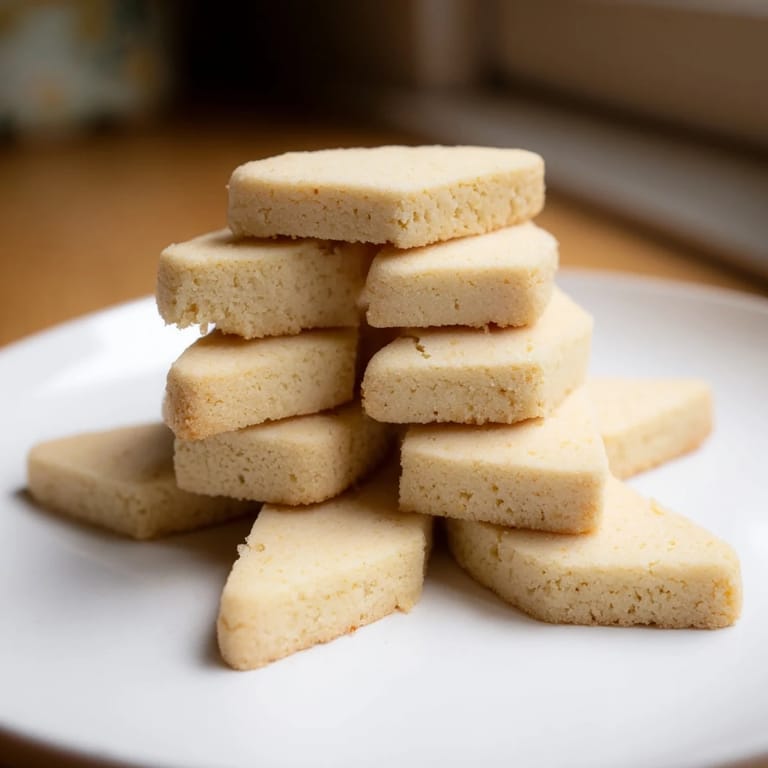
Save There's something almost meditative about making shortbread—the way butter and sugar come together in a bowl, how the flour disappears into something that feels like silk under your fingertips. I discovered this recipe on a rainy afternoon when I wanted something simple enough to make without thinking too hard, but good enough to feel proud of. The first batch came out impossibly tender, and I understood why the Scottish have been perfecting this for centuries.
I made these once for a neighbor who'd been stuck at home recovering from surgery, and the way her face lit up when she bit into one—like she'd forgotten how good simple things could taste—reminded me why baking matters. She ate three in a row without saying anything, just small satisfied sounds, and that's when I knew this recipe was keeper.
Ingredients
- Unsalted butter (1 cup, softened): The star of the show—use good butter and let it soften to room temperature so it creams smoothly with the sugar.
- Granulated sugar (½ cup): This amount keeps the cookies subtle and letting the buttery flavor shine.
- All-purpose flour (2 cups): Measure by spooning into your cup and leveling off, not scooping directly from the bag.
- Cornstarch (¼ cup): This is the secret to that signature tender, almost sandy texture—it keeps gluten from developing too much.
- Fine sea salt (¼ tsp): Just a whisper to wake up the butter flavor.
Tired of Takeout? 🥡
Get 10 meals you can make faster than delivery arrives. Seriously.
One email. No spam. Unsubscribe anytime.
Instructions
- Get your oven ready:
- Preheat to 325°F and line your baking sheet with parchment paper. This lower temperature keeps the cookies pale and tender instead of brown and crispy.
- Cream butter and sugar:
- Beat them together in a bowl until the mixture looks pale and fluffy, about 2 minutes. You're incorporating air here, which helps the texture.
- Bring the flour in gently:
- Sift the flour, cornstarch, and salt together first, then fold them into the butter mixture with a wooden spoon or your hands until just combined. Stop as soon as you see no flour streaks—overworking makes tough cookies.
- Shape and score:
- Press the dough evenly into an 8x8-inch pan or onto your baking sheet in a ½-inch thick rectangle. Use a sharp knife to score wedges or fingers and prick each piece lightly with a fork so they break cleanly later.
- Bake until golden at the edges:
- Bake for 22 to 25 minutes—the cookies should look pale with just a hint of gold at the edges. They'll firm up as they cool, so don't wait until they look fully done.
- Cool and cut:
- Let them rest in the pan for 5 minutes, then cut carefully along your scored lines while still warm. Transfer to a cooling rack to set completely.
 Save
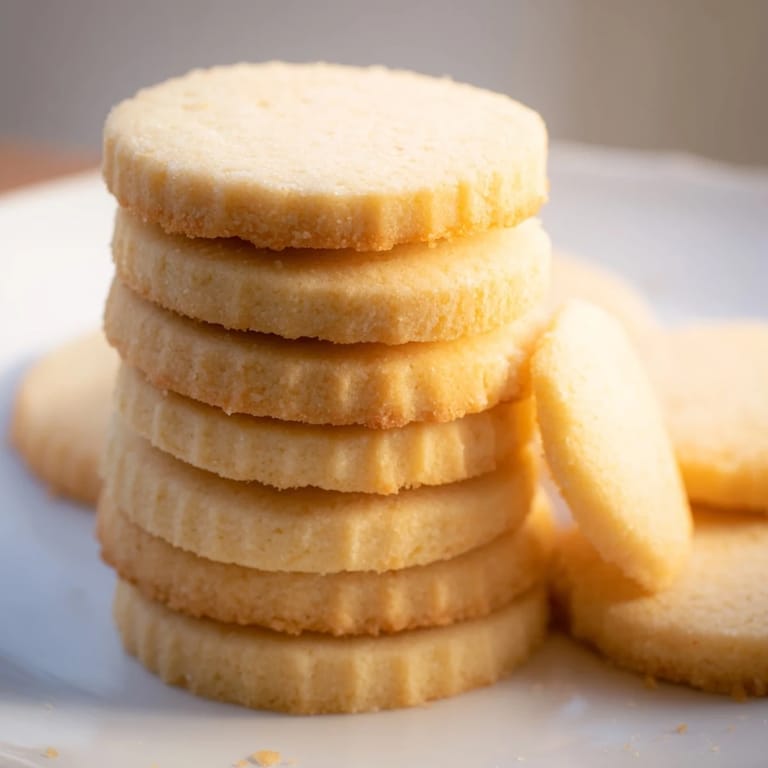
Save There was a winter morning when I made these for my daughter's school bake sale, and she carried the tin to school like it was treasure. A parent told me later that her son asked for the recipe because he couldn't stop thinking about how they tasted.
The Citrus Option
Adding brightness to shortbread feels like discovering a secret that was always there. Finely grated lemon or orange zest mixed into the creamed butter brings a subtle zing that makes the richness feel lighter, almost refreshing.
Chocolate Dipping
Melting chocolate and dipping the cooled cookies transforms them into something more decadent, though I've found that less is more—a thin coating lets the buttery shortbread still shine through instead of becoming all about the chocolate.
Storage and Keeping
The beauty of shortbread is how well it keeps, staying crisp and tender for days when tucked into an airtight container. I've kept them in tins for over a week and forgotten about them until a craving reminded me they were there.
- An airtight container is your friend—it keeps moisture out and crisp texture in.
- Keep these away from humid conditions or they'll start to soften.
- Layer parchment between stacks if you need to save space.
 Save
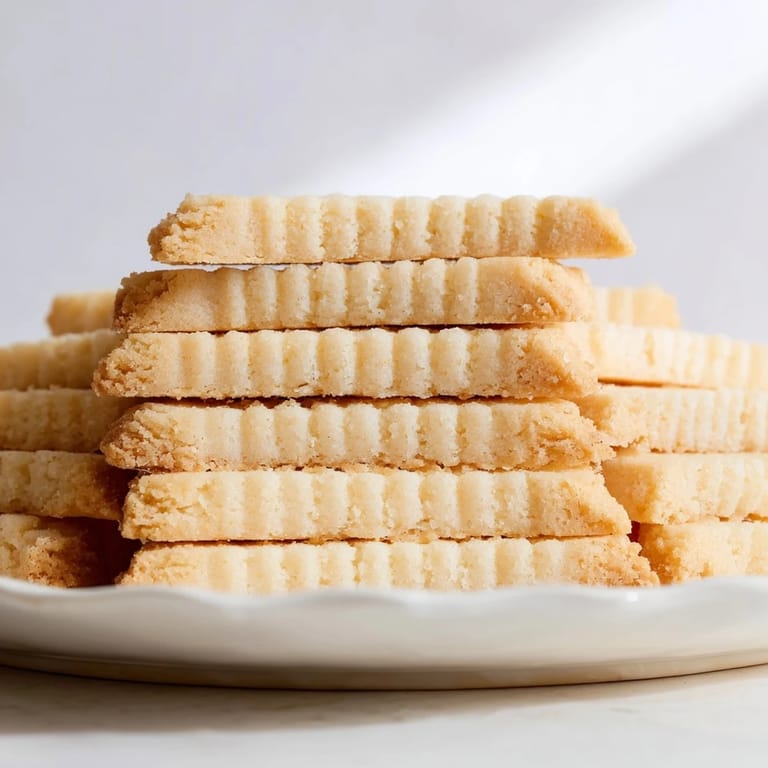
Save These cookies taste like care without complicated technique, which is exactly why they've stayed in kitchens for so long. Once you make them, you'll understand why people come back to shortbread again and again.
Recipe FAQs
- → What gives shortbread its crumbly texture?
The combination of softened butter and a mix of flour and cornstarch creates a tender, crumbly texture by limiting gluten formation.
- → How can I add a citrus flavor to the shortbread?
Finely grated lemon or orange zest added to the dough infuses a fresh, bright citrus note without overpowering the buttery base.
- → What is the best way to shape the dough before baking?
Press the dough evenly into an 8x8-inch pan or shape it into a half-inch thick rectangle on a baking sheet, then score with a sharp knife for easy portioning.
- → How do I prevent the shortbread from browning too much?
Bake at a moderate temperature (325°F/160°C) and watch for pale golden edges; overbaking can cause a dry or overly browned crust.
- → Can the shortbread be stored after baking?
Store cooled shortbread in an airtight container at room temperature to keep it fresh for up to one week.
- → Are there ways to add a rich twist to shortbread after baking?
Dipping cooled pieces in melted chocolate adds richness and a decadent finish, enhancing the buttery base.